 Exclusive Article
André Luiz Barros

University, for me, was a place for meetings, most of them, through knowledge. For example, I met my best friend there. Other remarkable meeting, this one 100% through book pages, was with the Polish philosopher Zygmunt Bauman and his concept of liquidity. I used his theory to guide my academic researches since then. I used it even to study funk carioca, one of my research objects up to now. Today, I will talk about liquid knowledge and lifelong learning - the era of customized and flexible learning that happens throughout life has arrived and it finds in live streamings the favorable environment for its propagation.
For Bauman, the solidity of things and relationships could be construed as a threat. And for a simple reason, any major long-term commitment in any sphere would limit the freedom of possibilities. Can you imagine? In 2021 we have to choose our career at the age of 18/20, or even earlier, if it will be technical or a undergraduate program, in rural areas or in big cities, in a company or in our own business, and let this decision guides the entire professional career of a life forever. It is a different time; ideas change and every single thing ages faster - there is a whirlwind of opportunities that may arise, and we do not even know yet. To put aside some things, as if they were disposable, is the “new black”. The permanent is old fashioned. Flexible is attractive.
And if almost everything can be discarded in this new world, why on earth would this behavior be different with knowledge? In a semi-post-Covid world full of live streamings, in which EAD format (distance education) has got stronger, and home education and home office became compulsorily real, the immediate learning and the summary of everything that is useful in just a one-hour meeting were transformed in a parallel universe of diplomas and course completions via LinkedIn posts.
If knowledge apprehension was already in crisis before 2020, especially due to the new technologies, the Covid-19 scenario took this scheme off the axis for good. How will institutions, whether schools, companies, deal with the collective education, especially for the acquisition of small knowledges through workshops and trainings from now on? Will the studies be less in-depth and more practical? It seems that to a certain extent, the forced learning in a very short term for our adaptation to the world of Coronavirus may impose itself as a new common rhythm of knowledge acquisition. But what would be risk in a universe full of wrong information? If the time itself was the major consolidator of formal knowledge, which was passed on from teachers to students, how would the new information, related to what is new, survive if it is necessary to be confirmed and ratified in such a short time, even by specialists? We are solemnly experiencing this situation with vaccines now, and it is not easy.
What we have learned in school during life were related to data confirmed throughout history and the contents assumed the existence of a long-term world, with on-site classes, where information was formally taught by teachers to apprentices, in a white board, with literary, audiovisual, and digital records. How about memory? We live in a liquid society of permanent disposal that focus on today, and now ‘Why memorize?’ seems to be the best question. If knowledge did not occupy space, now it occupies even less, basically because it does not necessarily need to be stored (not that it should not be).
In face of so many questions, one behavior prevails. It seems to make no more sense to accumulate knowledge and pass it on. Today we learn something to apply this week; next week we will be enrolled in a course to improve knowledge in other matter of interest for the agenda of the day and so on.
In a general context, from 2020 on, a lot of information had to be highlighted: the use of masks; support for social isolation; rules for the flexible regime of work; how to use Microsoft Teams and Zoom, etc. The information is passed on, however, in this specific case it had to be maintained for a period longer than Coronavirus’ survival, and this was a huge challenge. Up to now, for example, we can easily find articles in newspapers and magazines regarding the use of alcohol gel and the purpose of avoiding agglomerations. Not because the information has been forgotten, but simply because it was not stored with attention and care.
In addition to a challenge for communication, which will demand bigger waves regarding subjects of greater relevance, especially if they face negationist resistances or fake news; education, in turn, also goes through a mindset change and assumes the form of what has been called lifelong learning, where learning has become a process and no longer an action itself. We learn new things that are useful to us at the moment we are going to use them. It no longer makes sense to learn for a lifetime.
Live streamings and webinars find their peaks there. Short learning moments from the place that suits me better and, in some cases, at the most convenient moment for me - what a dream! The challenge is to maintain debates, qualified conversations and sustainable changes, that, in fact, it is not always the case.
For communication, the most valuable metric will be engagement and not the reach. It is a two-way street. I can learn and teach in the same situation. The co-created, opportune and provocative experience is the one that is privileged. For the social subject, in turn, the challenge is to get updated all the time and forever. For companies, the lifelong learning may represent a change in the profile of its employees - who will become more versatile and adaptable when performing different functions.
Distance education is nothing new; the competition for the attention in face of the wide range of information, and especially the use of this period of virtual education with the immediate interest content is what is going to define if a certain approach will be understood and put into practice or not. We are all in a test.
About the column:
 The published texts address general themes of internal and external organizational communication; relationship with the press; social networks and digital marketing; reputation and image and subjects of more recent discussion such as culture and brand; purpose and employer branding.
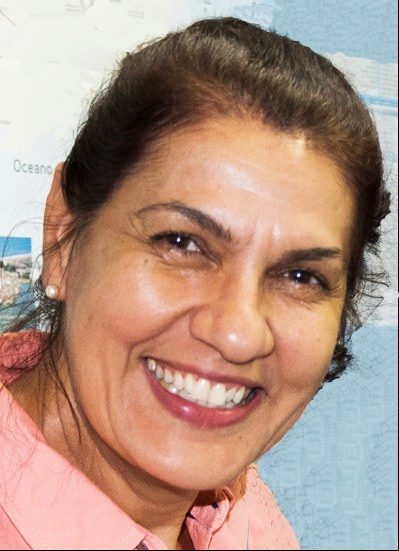
The new space is edited by Lia Medeiros (photo), Director of Communication, Sustainability and People at TN Petróleo, and signed by journalist André Luiz Barros, who has been working with corporate communication for 12 years and currently accumulates the position of communication manager in a company in the oil and gas sector.
Contact us