 Rio Oil & Gas 2020
T&B Petroleum/Press Office IBP
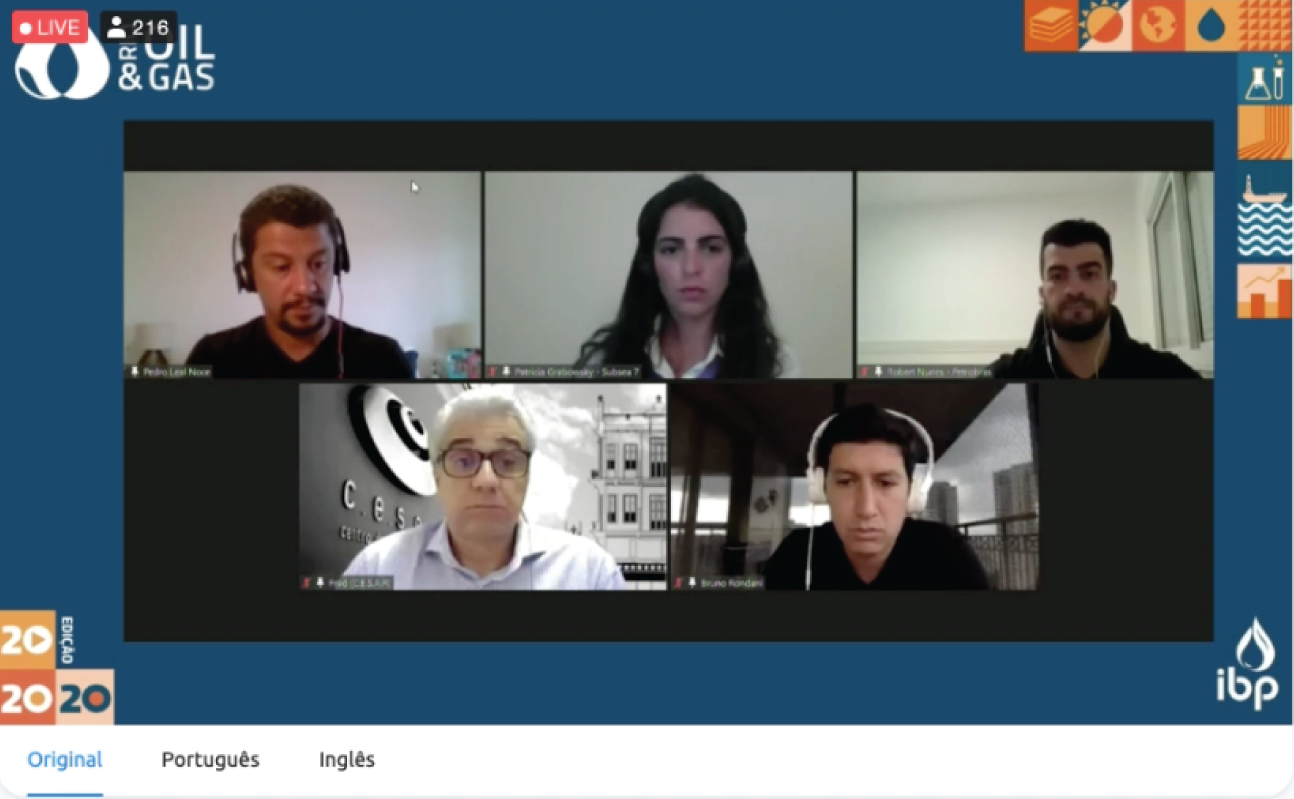
Rio Oil & Gas 2020 started this Monday (11/30) with Starting Up, debate sessions in partnership with Petrobras on the opportunities and challenges for startups in the O&G and energy industry. Starting Up was presented by journalist specialized in digital, Pedro Doria, and closed by IBP president, Clarissa Lins.
The panels brought discussions about how the O&G sector can be attractive to entrepreneurs, the opportunities for startups generated by the segment and how integration between the O&G chain and startups has taken place, aiming at building ecosystems. In addition, cases of successful and shared startups were presented, with entrepreneurs who are just beginning, as well as lessons learned about this market.
Juliano Dantas, executive manager of Petrobras-Cenpes, stated that whatever the company's strategy will be, it will be very important to accelerate innovation processes, and certainly, startups have a fundamental role in this context, since they work as speed and new talents and bring a new model of thinking to the traditional industry. "For this to happen in fact, we have to build an ecosystem that allows new forms of contract between major players and startups, in addition to engaging companies with this purpose of innovation," he said.
Gustavo Araújo, CEO of Distrito, which brings together one of the startup ecosystems in Brazil, spoke about the power of open innovation. “The market is learning that staying connected and connected to what is happening around you is the engine for your own transformation. Open innovation ends up being very efficient in a world where companies have to transform quickly, ”he said.
When analyzing the financial market, for example, before opening up to Fintechs, two thirds of the Brazilian population had no bank account, according to Araújo. Fintechs reduced that rate to 25%. “We can also experience open energy, in a very regulated market. This will lead to improved customer service and lower production costs. So, exercising open innovation is fundamental in the O&G sector, which already has a lot of technology, but now needs to start innovating in its business models, customer service, following other segments ”, he added.
Claudia Diniz, executive director of MiningHub, the world's first open innovation hub in the mining sector, explained that startups work as a real pillar of transformation in the sector, by employing new technologies for the operational and administrative areas. “It is a cultural change. We take the challenges of our industry and talk to all actors, including suppliers, researchers and startups, to quickly reach solutions to problems common to mining companies. The knowledge generated, that is, the intellectual property of the projects, continues to belong to startups and, thus, we encourage entrepreneurship and the permanence of these companies in the market ”, he said.
 “I believe that we, as an IBP, must encourage this type of hub to be created in the O&G sector, since we are a collaboration platform,” said Clarissa Lins, president of IBP.
At the end of the discussion, Christian Schock, director of O&G at Siemens, brought some tips of what the company is already doing to contribute to the decarbonization of the oil and gas industry, looking to the future. “It is important to make it clear that we are not going to do the whole process of energy transition from day to night. If we look at history, all the transitions took about 50 years and now it will be no different, since 80% of the global energy is still based on hydrocarbons and the demand will increase by 40% in the next two decades. The O&G industry has always been one of great innovation. With the decarbonization wave it will be no different and I believe it will be even more accelerated. Innovation is a major focus for Siemens and, therefore, we encourage startups to develop solutions for our partners ”, he concluded.



Contact us