
 Inland Navigation
Press Office

In the thick heat of the Amazon Basin or the silt-heavy waters of the Magdalena, vital workboat voyages can grind to a halt because of a shaft line seal or bearing failure.
Increasingly, fleet owners in Latin America’s turbid inland waterways are discovering that the surest path to long-term performance is not more sophistication, but enhanced simplicity.
That principle lies at the heart of a growing shift across the region’s river networks from grease-lubricated systems to water-lubricated bearings and seals.
Leading the transition is Thordon Bearings, the Canadian manufacturer whose RiverTough bearing and TG100 seal technologies are setting new standards for operational uptime, wear life, and environmental compliance across Colombia, Brazil, Argentina, Paraguay and beyond.
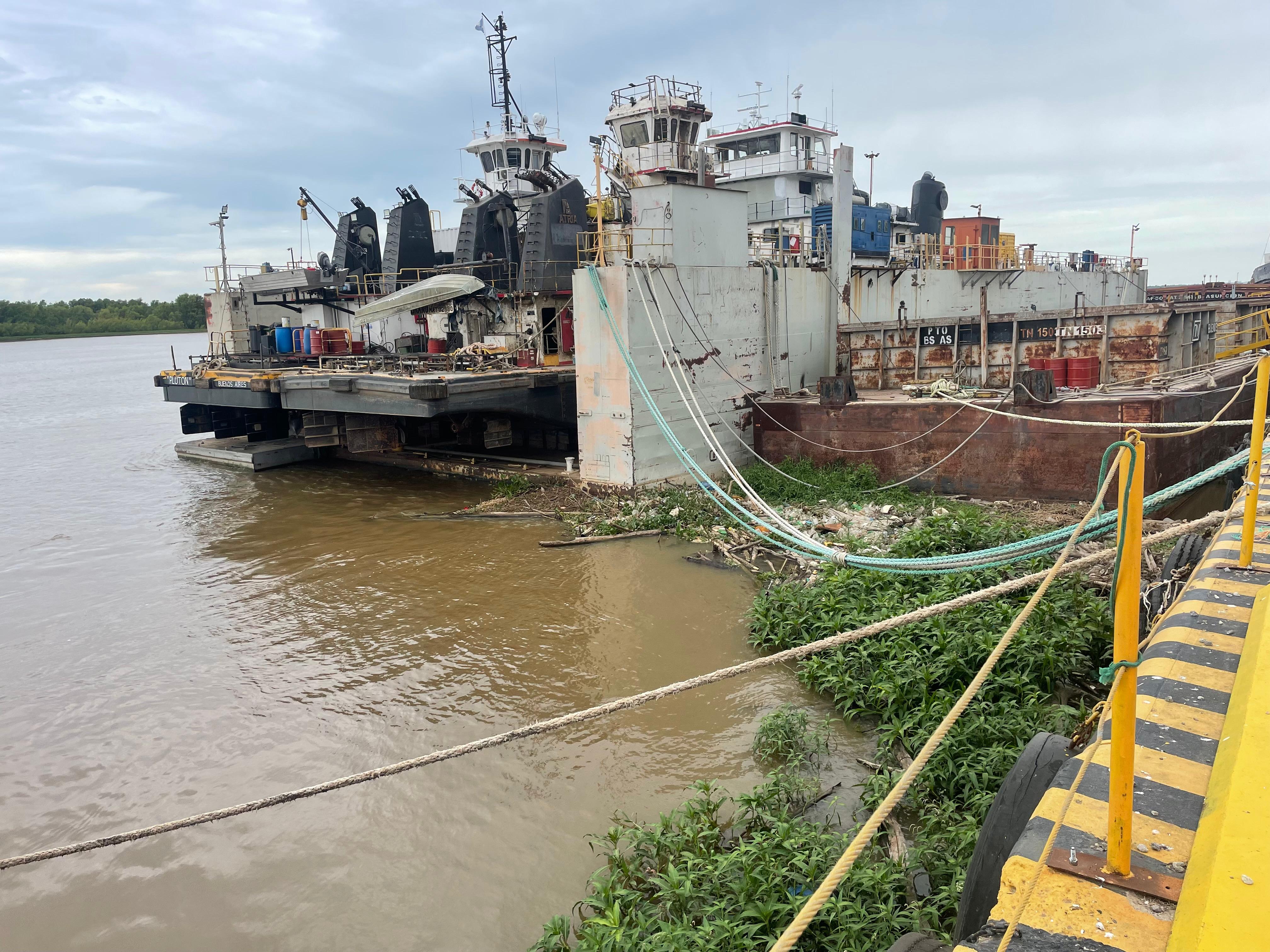
Installation with ATRIA, vessel Itapua
The Magdalena River, the Amazon and the mighty Paraná–Paraguay river system pose different, brutal tests for the propulsion system hardware that keeps workboats, tugs and pushers operational in brown waters.
Until recently, much of Latin America’s river fleet ran on bronze bearings and grease-lubricated shaft lines. But these systems have repeatedly proven ill-suited to the abrasive, log-strewn waters of the Amazon or the high-silt conditions of the Paraná. Grease lines clog. Bearings wear unevenly. Seal leaks allow pollutant oil discharge and water ingress.
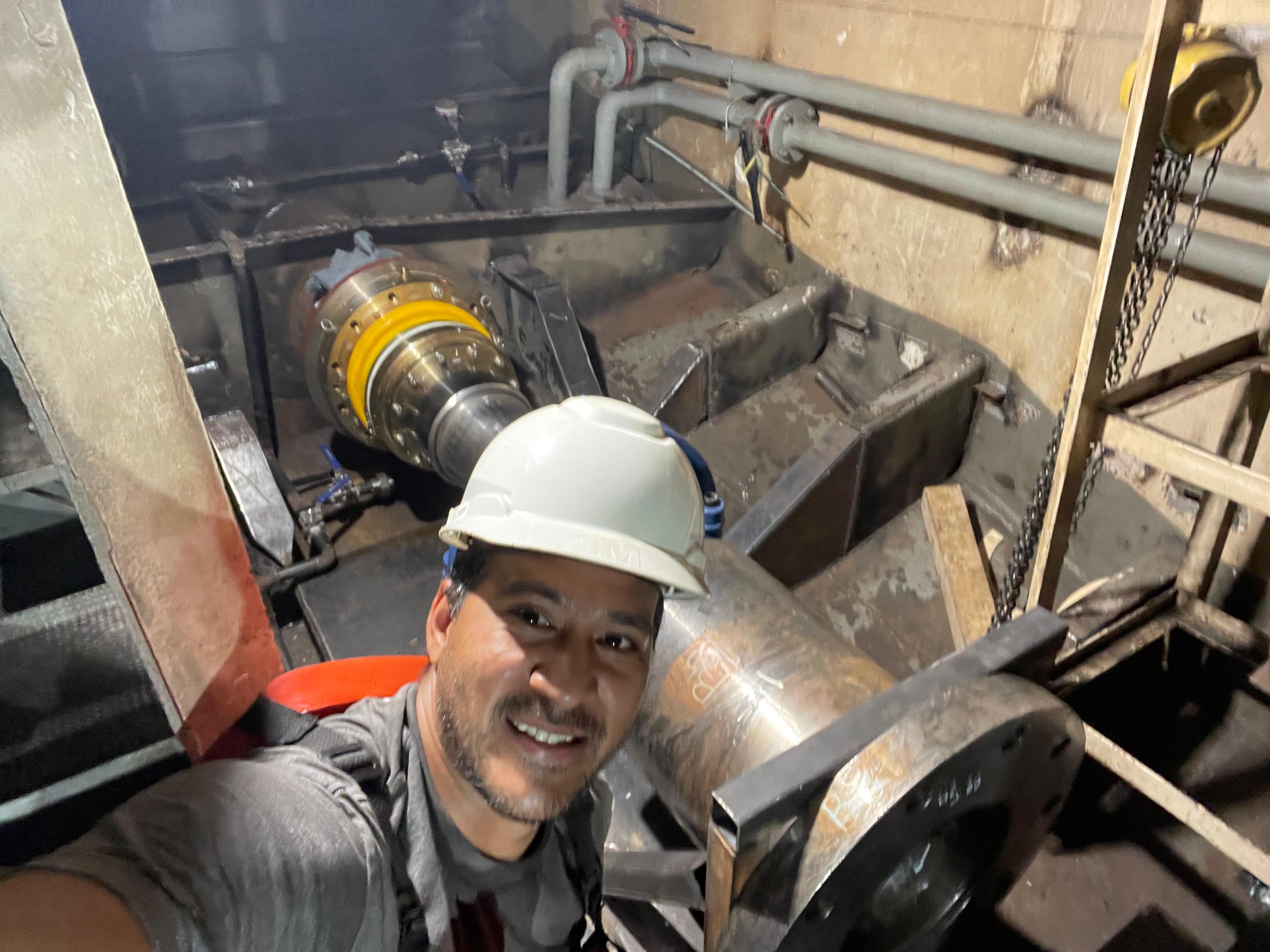
Perhaps most critically, when damage occurs, repair options are limited, especially when a vessel is operating hundreds of kilometers from the nearest yard amid thousands of square kilometers of remote and inhospitable Jungle.
Many operators have begun to reevaluate their approach to shaft line systems, turning to water-lubricated alternatives for their simplicity, durability, and environmental performance.
“Inland waterways are not the place for complexity,” says Egnard Bernal (photo), Business Development Manager for Thordon Bearings in Latin America. “What wins is what lasts — and what lasts is often what’s simplest to maintain.”
Thordon, whose customers in the region include Atria, Naviera Central and Cargo Line, has established a market-leading position in equipping vessels ranging from 3,600 to 5,400 horsepower, typically with two to four shaft lines of diameters between 152.4mm and 304.8mm (6 and 12in). Many of these vessels operate in areas without reliable access to drydocks or diving services, where emergency maintenance can cost money and days of disruption. For these vessels, shaft bearing and seal failures can be economically catastrophic and dangerous.
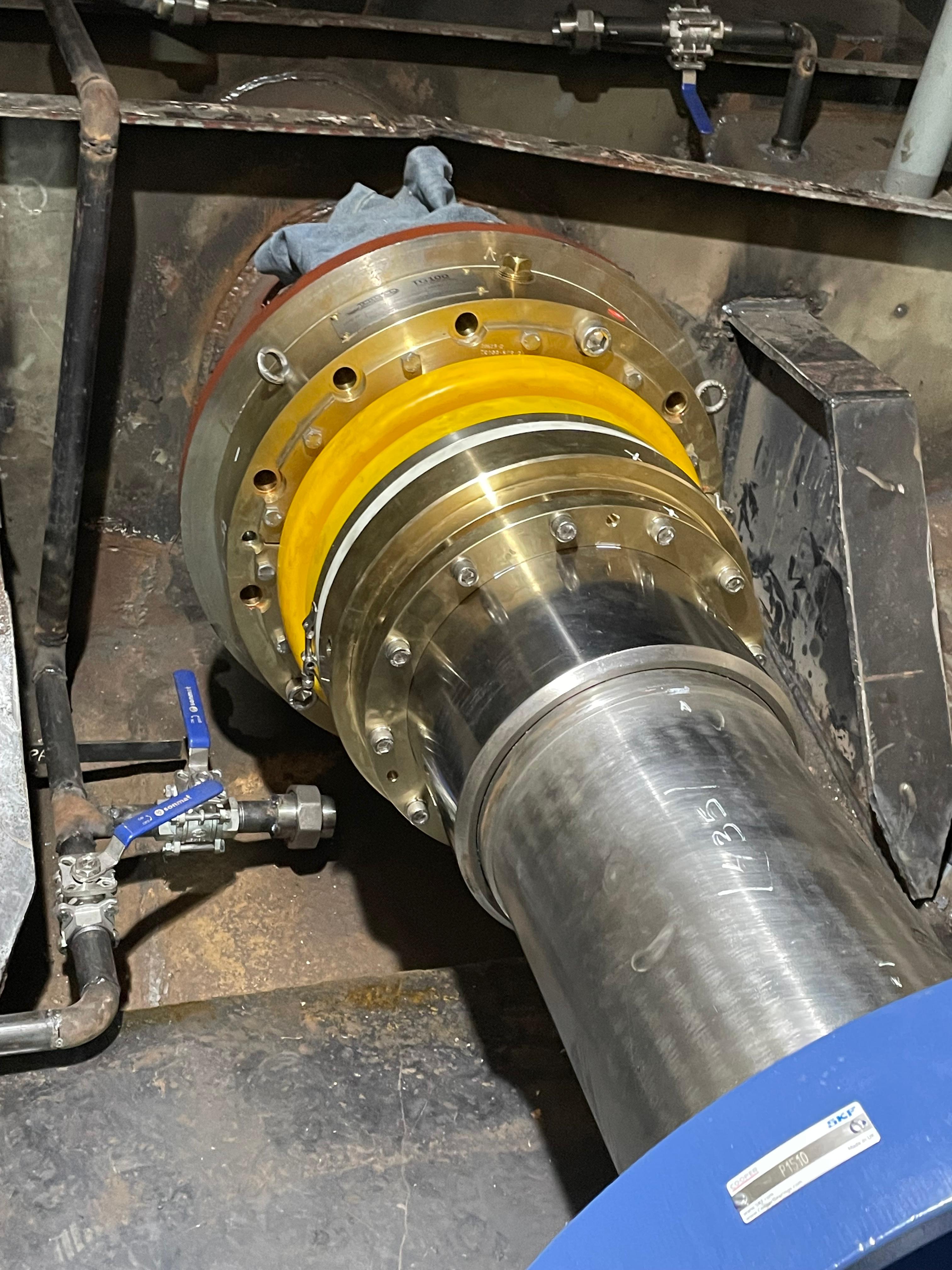
Completed installation of Thordon’s TG100 seal.
One of Thordon’s early success stories in Latin America came from a trial on the Amazon River in Peru. There, a vessel was outfitted with two identical shaft lines, one with Thordon RiverTough bearings, and one with a conventional rubber alternative. The results were decisive: after observing markedly reduced wear and edge loading on the RiverTough-equipped shaft line, the operator converted the entire fleet to RiverTough.
Data is available to back up the practical experience. In the U.S. inland market, Thordon water-lubricated bearings have achieved wear rates of just 0.0762–0.1016mm (0.003–0.004in) over 6000–7000 hours of typical workboat operation. This durability is due in part to the elastomeric alloy’s ability to absorb misalignment and tolerate edge loading better than metal or rubber alternatives.
Crucially, Thordon bearings are also highly forgiving during installation and operation. While conventional systems demand tight tolerances and precision alignment, RiverTough can accommodate some shaft misalignment due to the visco-elastic properties of its polymer material.
In Latin America, these real-world results have encouraged rapid adoption, particularly in retrofit applications. Thordon seals and bearings have acquired an estimated 20% market share in the Paraná–Paraguay waterway corridor, with additional growth expected in Colombia and Brazil.
Impala Case for Conversion
Among the workboat operators leading the transition is Impala, a major force along Colombia’s Magdalena River. Beginning in 2015, Impala undertook a multi-year program to convert vessels from oil-lubricated bronze bearings to Thordon’s water-lubricated RiverTough bearings and TG100 seals.
According to Bernal, the decision was driven by operational realities: “They were dealing with seal oil leaks, emergency dockings every few months, and maintenance costs that just kept climbing. Once they converted to the Thordon system, those issues fell away.”
Thordon’s TG100 shaft seal includes a built-in emergency ‘return-to-port function’ which the company believes is essential for remote river operations where support infrastructure is minimal. “One vessel equipped with TG100 shaft seals was not only able to return to port after a seal failure but also continued to voyage for 16 days on the emergency provision alone,” says Bernal.
Environmental Advantage - Operational Dividends
Operators might first consider water-lubricated systems for their environmental profile because they eliminate the risk of oil and grease pollution, but it is the operational cost savings that often close the deal, he adds.
Thordon’s ThorPlas-Blue deck equipment bearings are self-lubricating and do not require grease. This eliminates the need for periodic re-lubrication and the risk of grease contamination in sensitive river ecosystems. The bearings also resist abrasive wear from sand and silt which is a critical benefit in muddy waters. These features can also improve conditions onboard the vessel, eliminating the temptation to over-grease bearings in difficult-to-access steering gear and machinery spaces.
When replacement is required, the bearings can be easily machined in the field using standard tools. Many installations can be achieved by freeze fitting using dry ice, which is a method made possible by Thordon’s high thermal contraction coefficient. This simplifies fitting without requiring hydraulic presses.
Engineers are also supported through Thordon’s bearing calculation programs, which ensure minimum installed clearances account for not only running tolerance, but also thermal expansion and water absorption. These safeguards are vital in tropical river systems where fluctuating temperatures and humidity can stress materials not designed for such variability.
While RiverTough and TG100 dominate tailshaft applications in Latin America, Thordon also offers complementary solutions: its ThorPlas-Blue for steering linkages, SXL for rudder bushings, and polymer Pucker Seal are highly suitable for abrasive environments.
“We’re seeing more interest in going completely grease-free,” Bernal notes. “Operators have seen what is possible on the shaft line, and now they want that same zero-maintenance approach throughout the vessel.”
In a maritime technology market trending towards increasing complexity, a simple and effective revolution is quietly taking place along the rivers of Latin America. By avoiding over-complicating propulsion hardware, Thordon is leading the rediscovery that rugged simplicity can outperform overcomplicated systems, especially in the rough conditions of inland waterways.
With a growing reference list for successful retrofits, as well as newbuilds, Thordon Bearings is helping to ensure Latin America’s workboat fleets are defined by durability, reliability and low maintenance costs while eliminating oil or grease pollution to the sensitive rivers of Latin America.
The message is spreading. In the toughest environments, the most straightforward solutions often perform the best.






Contact us