
 Pre-Salt
T&B Petroleum/Press Office ANP
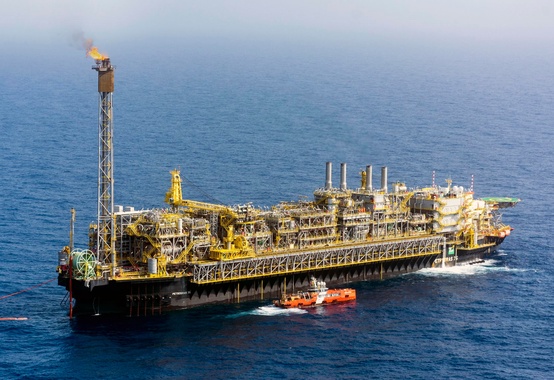
(Photo Petrobras Agency)
In July, the Lula field, in the Santos Basin pre-salt, was the largest producer of oil and natural gas, registering 988 Mbbl / d of oil and 43.2 MMm3 / d of natural gas, totaling accumulated production ( since 12/29/2010) of 2.038 billion barrels of oil equivalent, second only to the Marlim field, in the Campos Basin, which records an accumulated production (since 3/17/1991) of 2.827 MMboe.
The information is from the ANP's Monthly Bulletin on Oil and Natural Gas Production, with detailed data for July 2020. In this month, national production was 3,898 MMboe / d (million barrels of oil equivalent per day), of which 3,078 MMbbl / d (million barrels per day) of oil and 130 MMm3 / d (million m3 per day) of natural gas.
Oil production increased by 2.2% compared to the previous month and 10.9% compared to July 2019. In natural gas, there was an increase of 1.4% in relation to June and of 5% in comparison with the same month of the previous year.
During the month of July, 33 fields had their respective production temporarily interrupted due to the effects of the Covid-19 pandemic, of which 16 seafarers and 17 onshore, and a total of 60 marine production facilities remained with interrupted production. In June, there were 34 fields with interrupted production, 16 of which were seafaring and 18 onshore. There was no change in the number of marine facilities.
New graphics
As of this edition, the bulletin brings new graphics (27 to 30) containing data on the volume of natural gas injected and flared from marine facilities, in addition to the facilities that have a greater relationship between flaring and production and between injection and production of natural gas.
The burning of natural gas is necessary during production for safety reasons, such as maintaining the flame of the pilots of the production unit, whose existence is essential in cases of emergency so that the gas can be directed to the burners. In addition, it is common that during the commissioning period of the units, when the equipment of each unit system is put into operation, all the gas is burned, until these equipment, injection wells or drainage infrastructure are operational. As for the reinjection of the gas, it generally occurs to increase the reservoir recovery factor or due to the lack of flow infrastructure.
The ANP, together with the operators, has been making a great effort in recent years to reduce the flaring of natural gas to the minimum levels necessary to maintain the operations of the production facilities. The criteria for burning are provided for in ANP Resolution 806/2020. Recently, a study coordinated by the ANP on the use of natural gas in the pre-salt was published, which can be accessed at:http://www.anp.gov.br/noticias/5703-anp-lanca-estudo-sobre-aproveitamento-do-gas-do-pre-sal.
Pre-salt
Pre-salt production in July was 2,739 MMboe / d, which corresponds to 70.3% of the national total. 2,179 MMbbl / d of oil and 88.88 MMm3 / d of natural gas were produced through 117 wells. There was an increase of 2.5% in relation to the previous month and of 25.4% in relation to July 2019.
Use of natural gas
In July, the use of natural gas was 96.9%. 54.9 MMm³ / day were made available to the market. Gas flaring in the month was 4 MMm³ / d, an increase of 27.7% compared to the previous month and 15.3% if compared to the same month in 2019.
The increase in gas flaring compared to June was mainly due to the 6.3-fold increase in production of the P-70, compared to the previous month, which is in the Atapu field. The P-70 is in commissioning and therefore burns 100% of the natural gas produced. Another reason was the 9% and 5.5% increase in burning associated with the Búzios and Lula fields, respectively.
Origin of production
In July, offshore fields produced 96.9% of oil and 85.6% of natural gas. The fields operated by Petrobras were responsible for 94.8% of the oil and natural gas produced in Brazil. However, fields with exclusive participation by Petrobras produced 43.1% of the total.
Highlights
The Petrobras 76 m platform (photo), producing in the Búzios field through four wells connected to it, produced 168.649 Mbbl / d of oil and was the facility with the highest oil production.
The FPSO Cidade de Mangaratiba installation, producing in the Lula field, through seven wells connected to it, produced 7.417 MMm³ / d and was the installation with the highest production of natural gas.
Estreito, in the Potiguar Basin, had the largest number of onshore producing wells: 1,099. Marlim Sul, in the Campos Basin, was the maritime field with the largest number of producing wells: 67.
Marginal accumulation fields
These fields produced 376.4 boe / d, 112.6 bbl / d of oil and 41.9 Mm³ / d of natural gas. The Iraí field, operated by Petroborn, was the largest producer, with 259 boe / d.
Other information
In July 2020, 270 areas granted, three areas for consideration and five sharing, operated by 35 companies, were responsible for national production. Of these, 63 are maritime and 207 are onshore, 10 relating to contracts for areas containing marginal accumulations. Production took place in 6,807 wells, 508 of which were sea and 6,299 onshore.
The average API grade was 27.9 with 2.8% of production considered light oil (> = 31 ° API), 85.4% medium oil (> = 22 API and <31 API) and 11.8% heavy oil (<22 API).
The mature terrestrial basins (fields / long-term tests in the Espírito Santo, Potiguar, Recôncavo, Sergipe and Alagoas basins) produced 99 Mboe / d, of which 78.9 thousand bbl / d of oil and 3.2 MMm³ / d of gas Natural. Of this total, 82.2 thousand boe / d were produced by Petrobras and 16.8 thousand boe / d were produced by concessions not operated by Petrobras, of which: 10,910 boe / d in Rio Grande do Norte, 5,338 boe / d in Bahia , 313 boe / d in Alagoas, 175 boe / d in Sergipe and 79 boe / d in Espírito Santo.







Contact us