Press Office

Brazil's offshore industry has built its reputation on overcoming complex engineering challenges. From unlocking pre-salt reserves in ultra-deep water to operating one of the world's largest FPSO fleets, the sector has consistently pushed technological boundaries.
Yet one challenge remains difficult to solve: understanding how subsea wellheads behave throughout their operational life.
Models tell us what should happen. Monitoring shows us what actually happens.
For decades, offshore integrity management has relied on engineering models validated by inspections and periodic measurements.
Wellheads are among the most critical assets in any offshore development. They experience a combination of environmental and operational loading throughout their lifespan, yet operators have historically had limited visibility of how these assets actually respond over time.
As Brazil's offshore fields mature and operators seek to maximise the value of long-life assets. This becomes an increasing factor of uncertainty around how these assets are actually behaving.
In addition, as operators expand beyond the core pre-salt provinces into increasingly challenging frontier acreage, such as Brazil’s northern Equatorial Margin, a different integrity challenge is emerging.
In the Foz do Amazonas Basin off Amapá, the issue is not simply deeper water. It is whether well control, containment and inspection strategies can be demonstrated in a remote area influenced by the North Brazil Current, Amazon outflow and complex metocean conditions.
Reported surface currents near Equatorial Margin lease areas can exceed 0.75 m/s, increasing demands on rig station-keeping, riser behaviour, subsea intervention and any wellhead inspection or repair campaign.
For wellheads, those conditions matter because strong, variable currents can drive riser motion, vortex-induced vibration and load transfer into the conductor and wellhead system.
They can also make ROV inspection, connector checks and any contingency repair work more difficult to plan and execute within available enviromental windows. For operators investing in the next generation of deepwater developments, direct measurements of real-world wellhead behaviour are becoming essential for validating assumptions, reducing uncertainty and maintaining confidence in long-term well integrity.
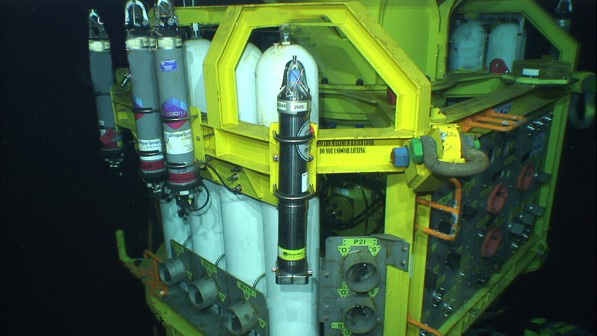
image: Trendsetter Vulcan Offshore
The challenge: understanding long-term wellhead fatigue
The offshore industry has become reliant on snapshot inspections for integrity management and the data gathered isn’t enough to support fatigue estimates.
Damage can occur without the operator knowing or an inspection can reveal that an asset has moved, but not what has led to the damage.
Understanding and managing fatigue accumulation over the life of an asset is a challenge without measuring wellhead performance throughout that life.
Real time monitoring of wellhead motion and strain can also provide the forewarning of damage and potentially save operators time and money avoiding early abandonment and potentially overly cautious theoretical uncertainties.
This is especially important for wellheads and conductor systems in deepwater environments.
Drilling risers, vessel motion, current-induced loading, thermal effects and operational activities can all influence the forces experienced by the wellhead. Issues like VIV are present and high loads may occur on the wellhead.
Better decisions around integrity management can be made through a combination of measured data, modelling assumptions and engineering judgement.
From data collection to integrity intelligence
However, historically, there has been a gap between data gathering and decision making, even when continuous data is gathered.
Moving the analysis to the data source starts to close this gap.
Sonardyne's Observer platform has been developed for long-duration monitoring of subsea assets including wellheads, risers, moorings and pipelines.
Observer combines sensing, onboard processing and wireless underwater communications within a single system. Rather than functioning solely as a subsea data logger, it can analyse data at the point of collection and identify changes in behaviour that may require investigation.
The result is a monitoring architecture designed to deliver useful information throughout asset life, driving proactive integrity management, reducing cost and risk.
By working with partners, such as AMOG Consulting, Sonardyne further reduces the data to decision gap that can be created when operators have to contract with different parties to understand their data.
Sonardyne brings decades of expertise in long-duration, smart subsea monitoring, underwater communications and remote subsea data access.
Partners like AMOG contribute deep experience in structural integrity, riser mechanics, fatigue assessment and well engineering that can be embedded onto instruments like Observer, delivering data faster, at source.
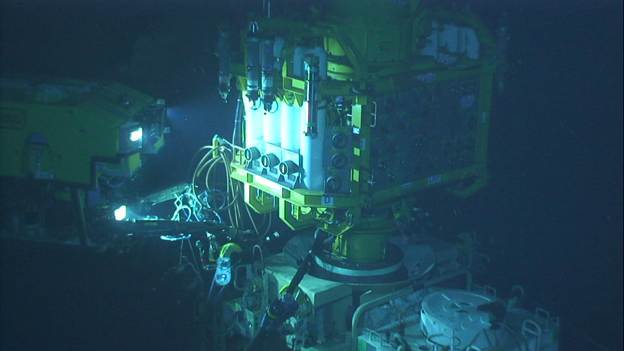
image: Trendsetter Vulcan Offshore
Why Brazil may be an early beneficiary
Few offshore regions offer a stronger case for this approach than Brazil, and the Foz do Amazonas Basin makes the argument particularly clear.
Its frontier status, sparse operating history, distance from established offshore hubs and environmental sensitivity all push the need for evidence-led integrity management.
Deepwater developments, long asset life cycles, extensive use of floating production systems and high intervention costs all increase the value of understanding asset behaviour, reducing uncertainty without requiring additional offshore campaigns.
Brazil’s well-integrity framework already places responsibility on operators to manage well integrity across the full life cycle, from design and construction through intervention and abandonment.
ANP’s Well Integrity Management System regulation establishes minimum safety and environmental requirements for wells in Brazil, including lifecycle management practices that depend on monitoring, inspection and testing.
Continuous wellhead monitoring can support that framework by giving operators a clearer, time-based record of loads, movement and barrier-related events between inspection campaigns.
The industry is already moving towards greater use of autonomous operations, remote monitoring and long-duration seabed technologies. Continuous wellhead monitoring fits naturally within that broader trend.
For operators, the attraction is straightforward: better information, gathered more frequently, leading to more confident integrity decisions.
The future of integrity management
The real question is not whether inspections will continue to play a central role. They will.
The more interesting question is what happens between inspections.
As monitoring technologies mature and the industry gains greater access to continuous behavioural data, integrity management is likely to become less dependent on periodic observations and more focused on understanding how assets perform in the real world.
For Brazil's offshore sector, that could represent a significant shift.
The next frontier may not be deeper water, longer tiebacks or larger developments. It may be the ability to continuously understand the health of the assets already operating on the seabed, and to prove that understanding in the places where intervention is hardest and the consequences of uncertainty are highest. And for wellheads, that understanding could prove invaluable.
About the Author: Frank Rose is Business Development Manager - Subsea Asset Monitoring, Sonardyne.
Images courtesy of Trendsetter Vulcan Offshore. The company used Sonardyne’s SMART monitoring system as part of a deepwater wellhead uprighting project completed in Brazil.





Contact us
2